

Aug 18, 2026
High-power LEDs generate considerable heat during operation, causing the LED junction temperature to rise. If this heat is not dissipated effectively, elevated junction temperatures can reduce luminous efficiency, accelerate aging, affect optical characteristics, and shorten LED operating life.
Thermal management becomes particularly challenging when limited local copper area creates thermal bottlenecks and restricts heat spreading. Space constraints, electrical isolation requirements, and the construction of the application can also limit the use of conventional heat-transfer solutions.
Lotus Thermal Guides (LTGs) are thermally conductive yet electrically isolated silicon-based thermal jumpers designed to guide heat away from hot electronic components without establishing an electrical connection.
By thermally coupling LED electrical nodes with limited local copper area to larger copper regions, LTGs can reduce thermal bottlenecks and improve heat spreading while maintaining electrical isolation.
Heat generated at the LED junction must be transferred away from the device and dissipated into a cooler part of the system. The effectiveness of this thermal path has a direct impact on the resulting LED junction and surface temperatures.
In compact designs, however, the local copper area available around the LED may be limited. This restricts heat spreading and can lead to higher operating temperatures, particularly as the LED drive current and thermal load increase.
The challenge is therefore to create an additional path for heat to move away from the LED region without compromising the electrical design of the system.
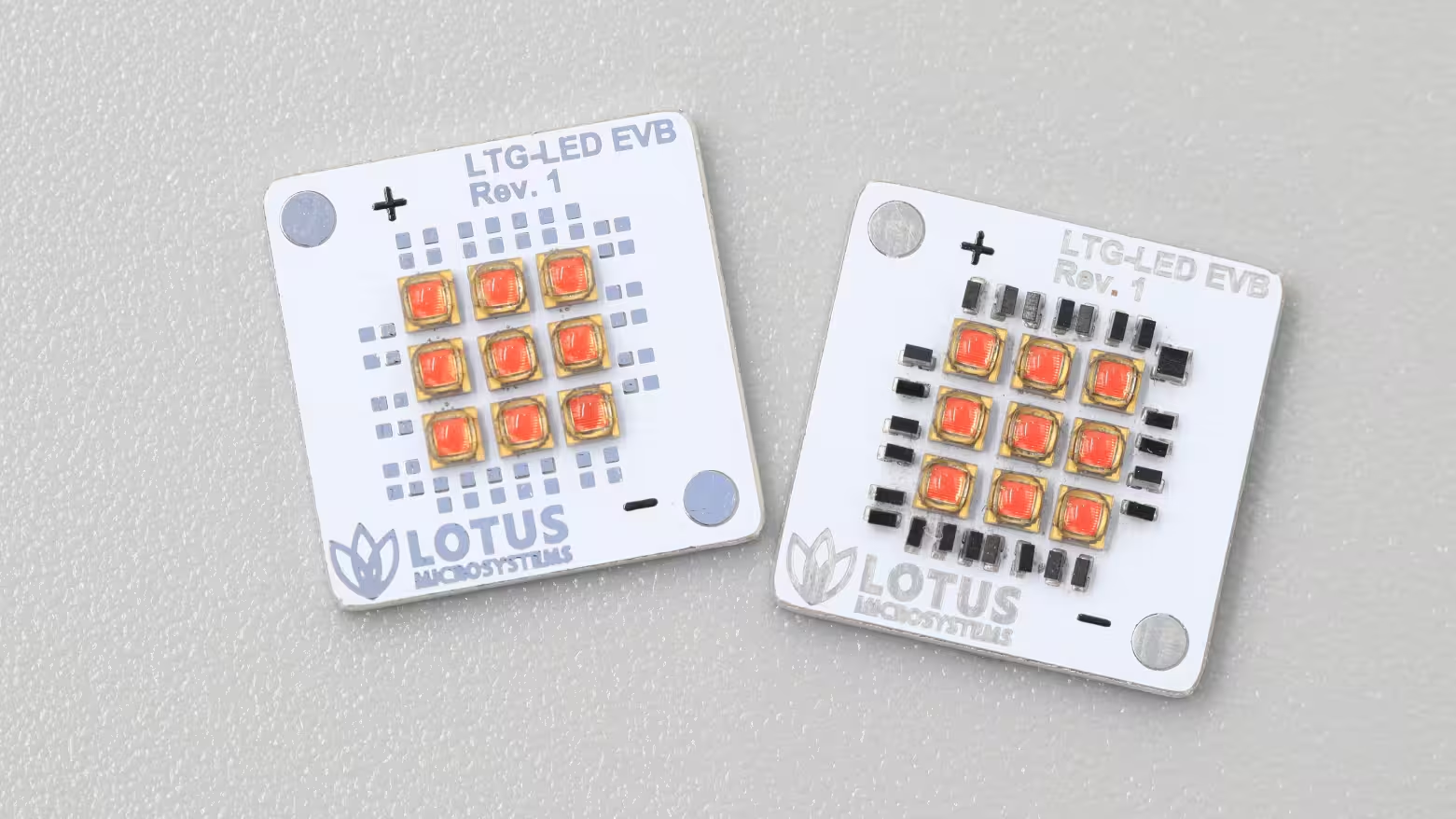
To evaluate the thermal impact of LTGs, Lotus Microsystems developed two 16 mm × 16 mm single-layer aluminum evaluation boards, each containing nine high-power LEDs connected in series.
One board incorporated 26 LTG0402 thermal jumpers around the LEDs, thermally connecting the LED electrical nodes to a larger copper plane. The second board used the same layout but without the LTGs.
The boards were evaluated using LED forward-voltage measurements to estimate junction temperature after operation at 350 mA, while thermal imaging was used to compare LED surface temperatures at 350 mA, 550 mA, and 750 mA.
After 25 minutes of operation at 350 mA, the EVB with LTGs showed a 6 °C lower junction temperature compared with the EVB without LTGs.
The measured junction temperature rise was reduced from 22.6 °C to 16.6 °C, corresponding to a 26.4% reduction in temperature rise.
Thermal imaging independently confirmed the thermal advantage of the LTGs and showed that the improvement became more pronounced as the forward current and thermal load increased.
The measured steady-state LED surface temperature reductions were:
At the highest operating point of 750 mA, the final maximum LED surface temperature reached 96.2 °C on the board without LTGs, compared with 76.1 °C on the board with LTGs.
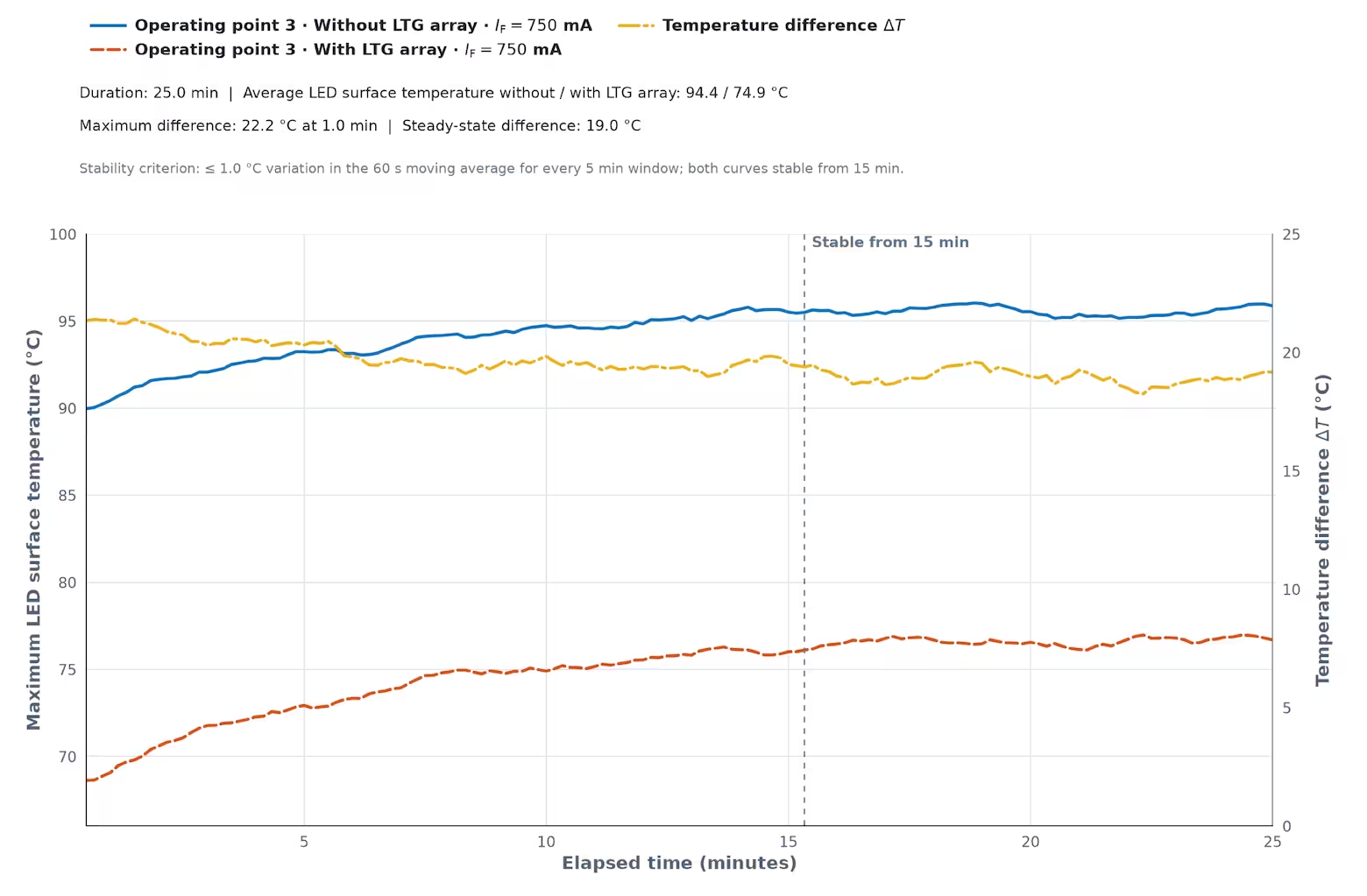
The maximum temperature difference measured during this test reached 22.2 °C.
These results demonstrate that the thermal benefit of integrating LTGs becomes more pronounced as the LED thermal load increases.
Want to explore the evaluation in more detail? The full application note provides a closer look at the evaluation board design, operating principle, experimental setup, and measurement methodology, including how LED forward voltage was used to estimate junction temperature.
Download the application note to explore the complete test methodology and results.


