

Sep 30, 2026
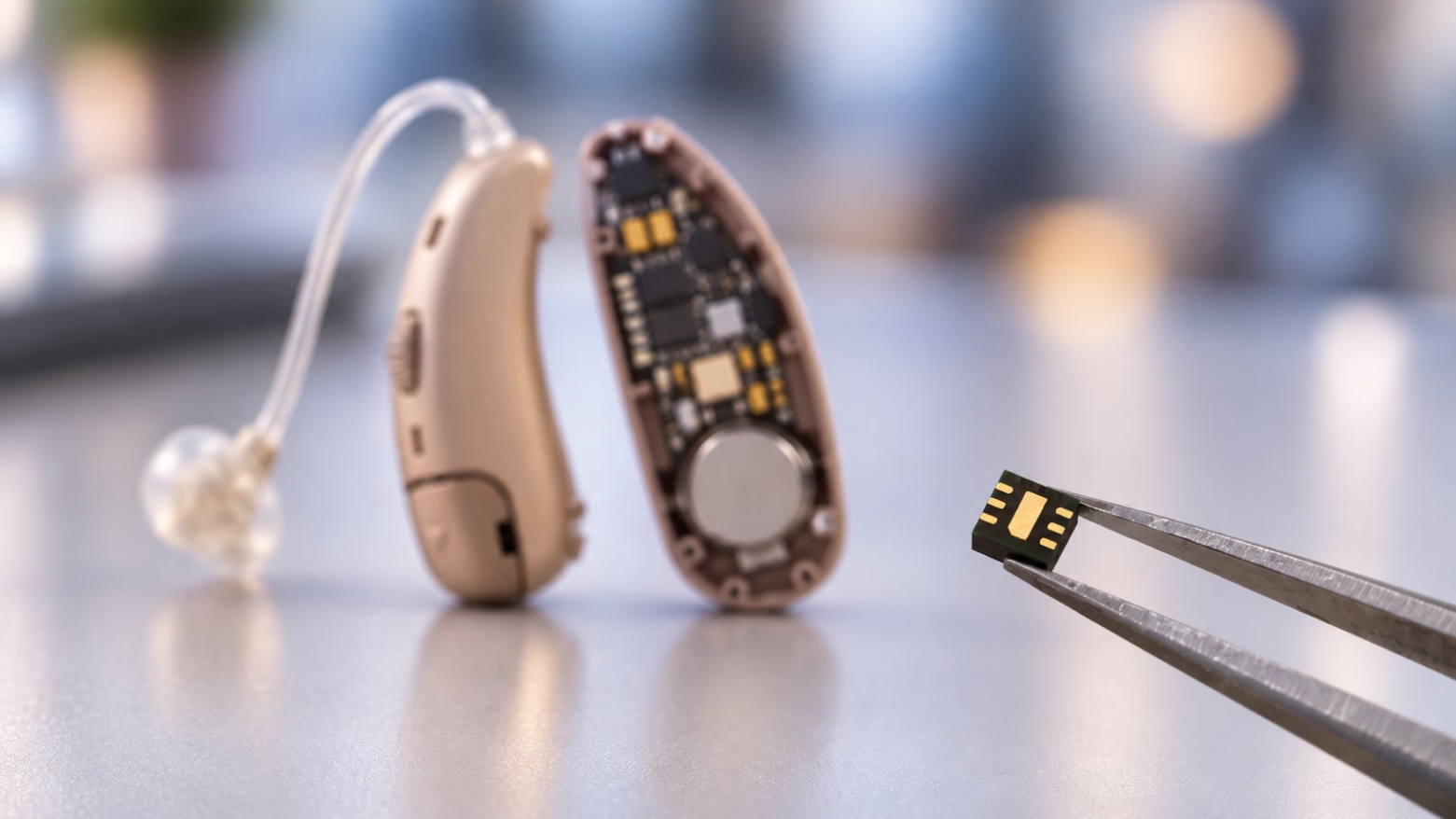
Battery-powered electronics increasingly need to combine long operating life with smaller form factors. From IoT sensors and wearables to hearing aids and medical devices, many applications rely on small batteries while requiring a stable and efficient power supply.
As a battery discharges, its output voltage decreases. Even when the battery is not completely depleted, its voltage can eventually become too low to directly supply the electronics. Efficiently boosting very low input voltage levels is therefore important for making better use of the energy available from the battery.
The LMU20P1 from Lotus Microsystems addresses this challenge with a miniaturized step-up Power Supply in Package (PSiP) designed for low-voltage, battery-powered applications.
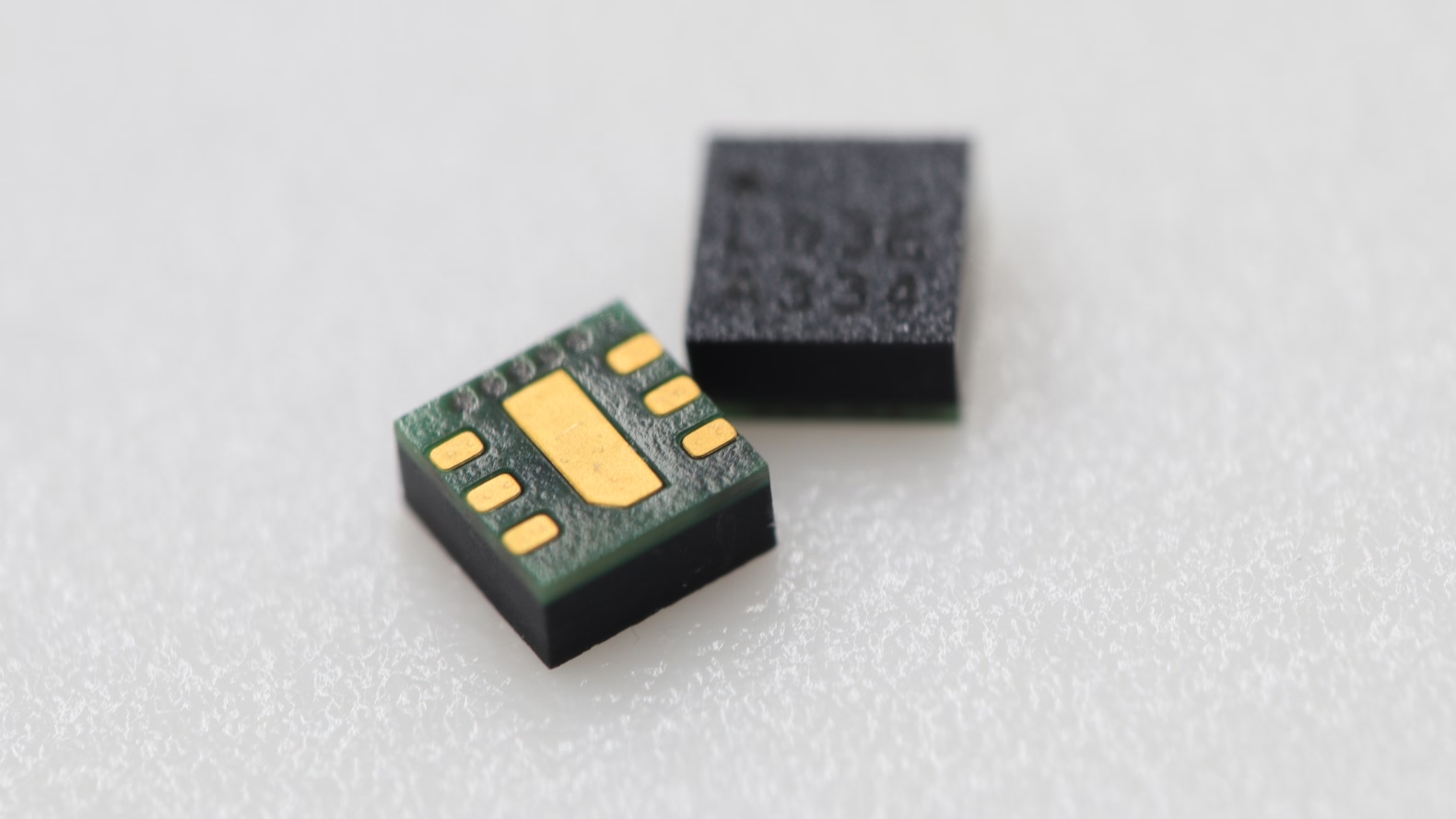
The LMU20P1 is a 100 mA synchronous boost converter capable of operating from input voltages as low as 0.5 V. By stepping up the battery voltage to the required output voltage, it enables the system to continue operating as the battery voltage decreases during discharge.
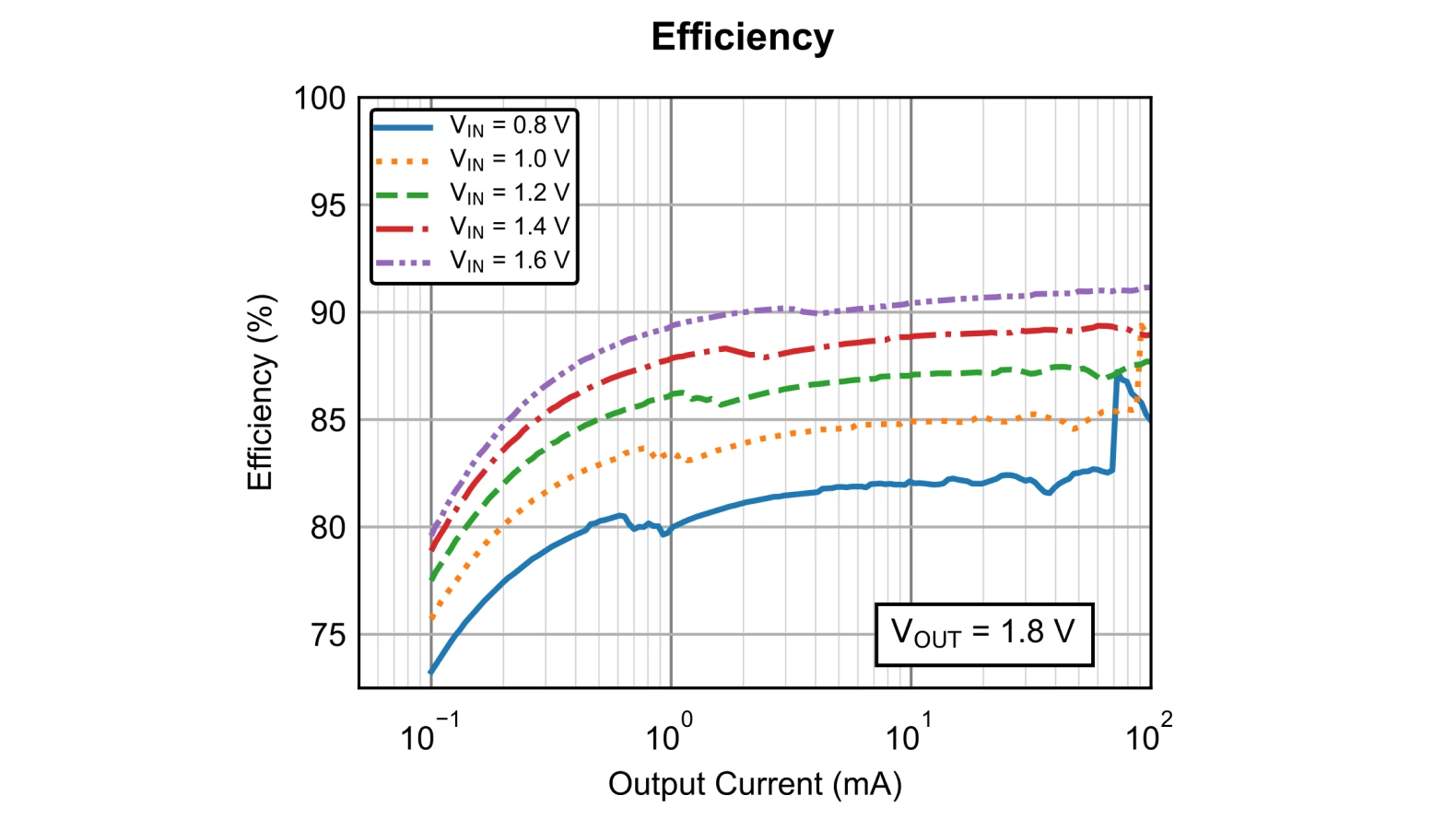
Efficiency is particularly important for devices such as sensors that may spend long periods operating at very low loads. The LMU20P1 achieves up to 92% efficiency and includes a light-load efficiency enhancement function to maintain efficient operation across a wide load range. Still at a load of only 100 µA, efficiency can reach up to 80%.
By reducing conversion losses and by operating at low input voltages, the LMU20P1 helps designers make more effective use of the limited energy available from small batteries.
Start-up can place additional demands on a battery due to the initial current required to power the system. The LMU20P1 features a proprietary start-up circuit designed to minimize input inrush current, reducing the current demand on the power source during start-up. This can be particularly useful in battery-powered systems where limiting the current drawn from the source during power-up is important.
The device also integrates a range of protection features, including over-temperature protection, short-circuit protection, and cycle-by-cycle current limiting.
Together, high light-load efficiency and controlled start-up support efficient operation in battery-powered applications.
In addition to battery lifetime, PCB area is a major consideration in miniaturized electronics.
The LMU20P1 integrates both the power conversion circuit and its inductor into a compact 6-pin LGA package measuring only 2 × 2 × 0.75 mm. Integrating these components into a single PSiP helps reduce the overall solution footprint and simplifies implementation in space-constrained designs.
The combination of low-voltage operation, high efficiency across a wide load range, low start-up inrush current, and compact integration makes the LMU20P1 suitable for IoT sensors, wearables, hearing aids, medical devices, and other battery-powered electronics.


