

Jul 6, 2026
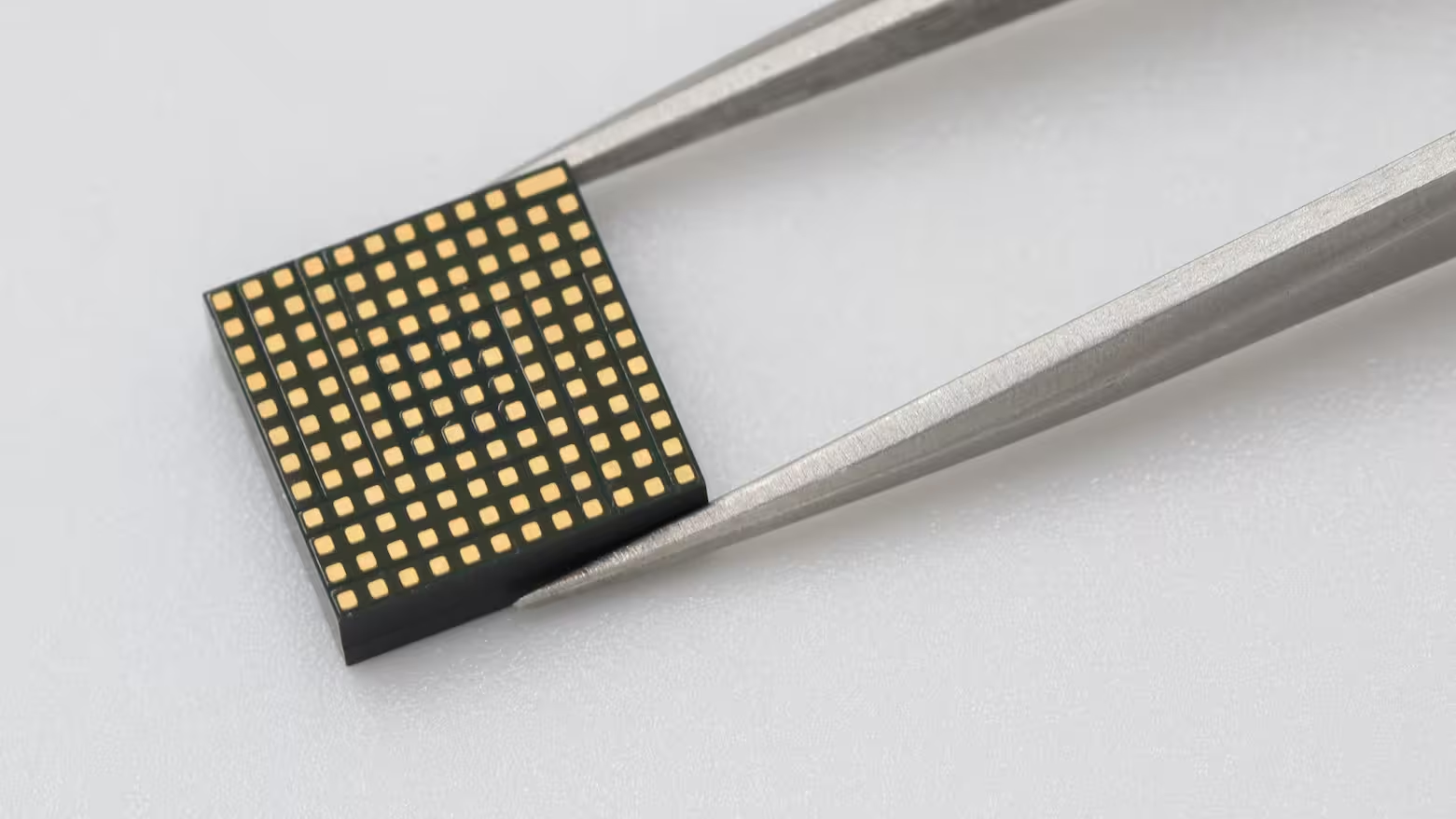
As AI accelerators continue to push the boundaries of compute performance, traditional power delivery architectures are approaching their physical limits. In a recent interview with Power Electronics Magazine, Lotus Microsystems CEO Hans explained why the industry needs to rethink conventional power architectures and how the company’s vStrata Vertical Power Delivery platform is designed to address electrical, thermal, and mechanical constraints as a single, co-engineered system.
Today’s AI processors require unprecedented amounts of current. Conventional power delivery architectures route that current horizontally across the PCB before it reaches the processor. As power levels continue to increase, these long electrical paths introduce significant resistive losses and generate substantial heat before the power even reaches the AI processor.
As Hans explains: “The industry has been trying to power 21st century AI chips with 20th century architecture.”
The vStrata platform addresses this challenge by dramatically shortening the electrical path. By placing the power converter directly beneath the processor, it significantly reduces the resistive losses associated with long copper traces, addressing the bottleneck at its source.
Historically, power delivery and thermal management have been treated as separate engineering challenges, often handled by different teams before being combined later in the design process. As AI power densities continue to increase, that traditional approach is becoming increasingly difficult to sustain.
The vStrata platform approaches power delivery and thermal management as a single, co-engineered system.
At the center of the platform is Lotus Microsystems’ silicon Power Interposer Technology (PIT), which serves two critical functions simultaneously:
This provides hardware designers with a single, predictable, co-designed platform that helps optimize both power delivery and thermal performance.
The first vStrata module, LSC0580, is designed to reduce power conversion losses by up to 50%.
This improvement comes from two complementary innovations:
While the Silicon Power Interposer is not responsible for the efficiency improvement itself, it plays a vital role by efficiently conducting away the remaining heat generated during power conversion, helping maintain stable operation under demanding AI workloads.
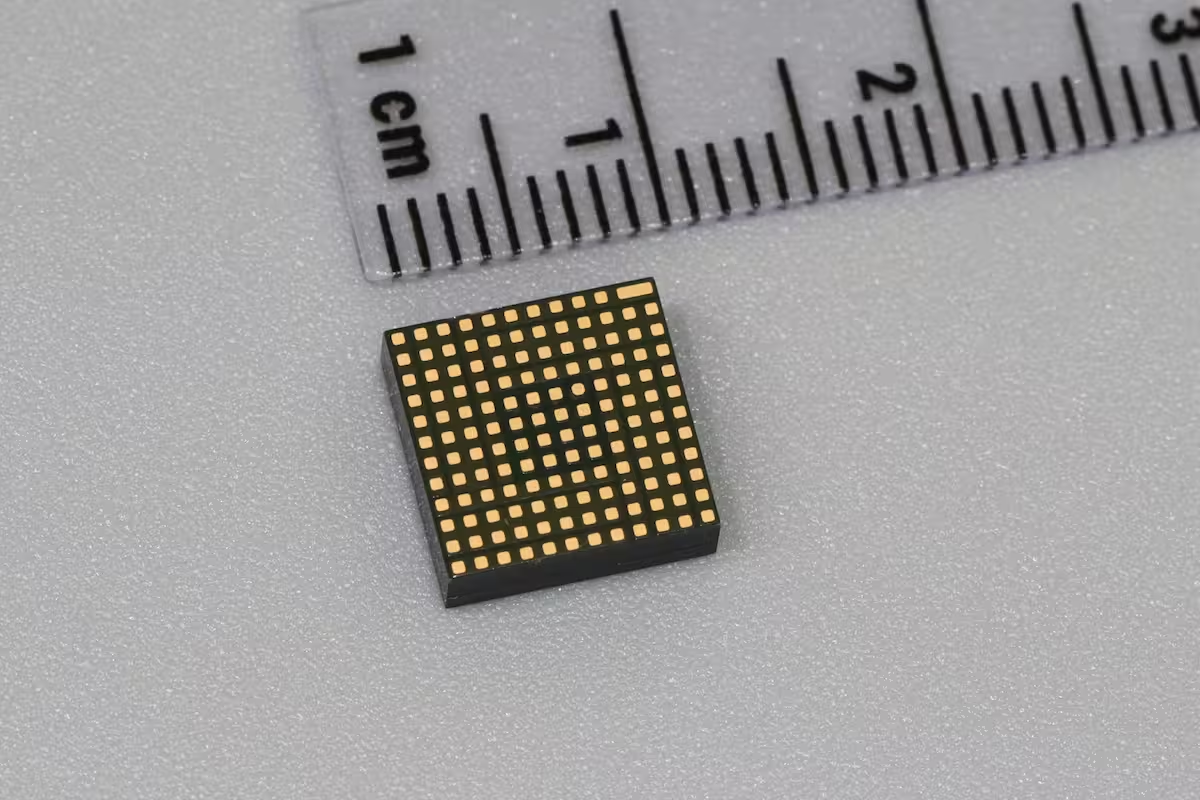
Modern AI processors can transition to kiloampere-level current demands almost instantaneously. Any delay in supplying that current can result in voltage droop, degraded performance, or even processor instability.
Traditional designs address this challenge by placing large banks of external capacitors around the processor. The vStrata platform instead integrates the required energy reservoir directly within the power delivery module.
Combined with power conversion located directly at the point of load, this enables transient response rates exceeding 10 A/ns while reducing latency associated with external components and simplifying overall board design.
As AI systems continue to scale, thermal bottlenecks are becoming one of the defining challenges for next-generation AI infrastructure.
Rather than treating the symptoms of heat after it has accumulated, the vStrata platform is designed to address the problem at its source by reducing the power losses that generate heat in the first place.
By improving conversion efficiency, the platform generates significantly less waste heat. Any remaining heat is conducted away through the Silicon Power Interposer as it is generated, preventing hotspots from developing.
This approach can reduce point-of-load operating temperatures by up to 25°C while also delivering additional system-level benefits, including:
As AI workloads continue to grow, power delivery is becoming a defining challenge for next-generation computing. By bringing power conversion closer to the processor and co-engineering electrical and thermal performance, the vStrata Vertical Power Delivery solution offers a new approach designed to support higher performance, greater efficiency, and increased compute performance for future AI infrastructure.


