

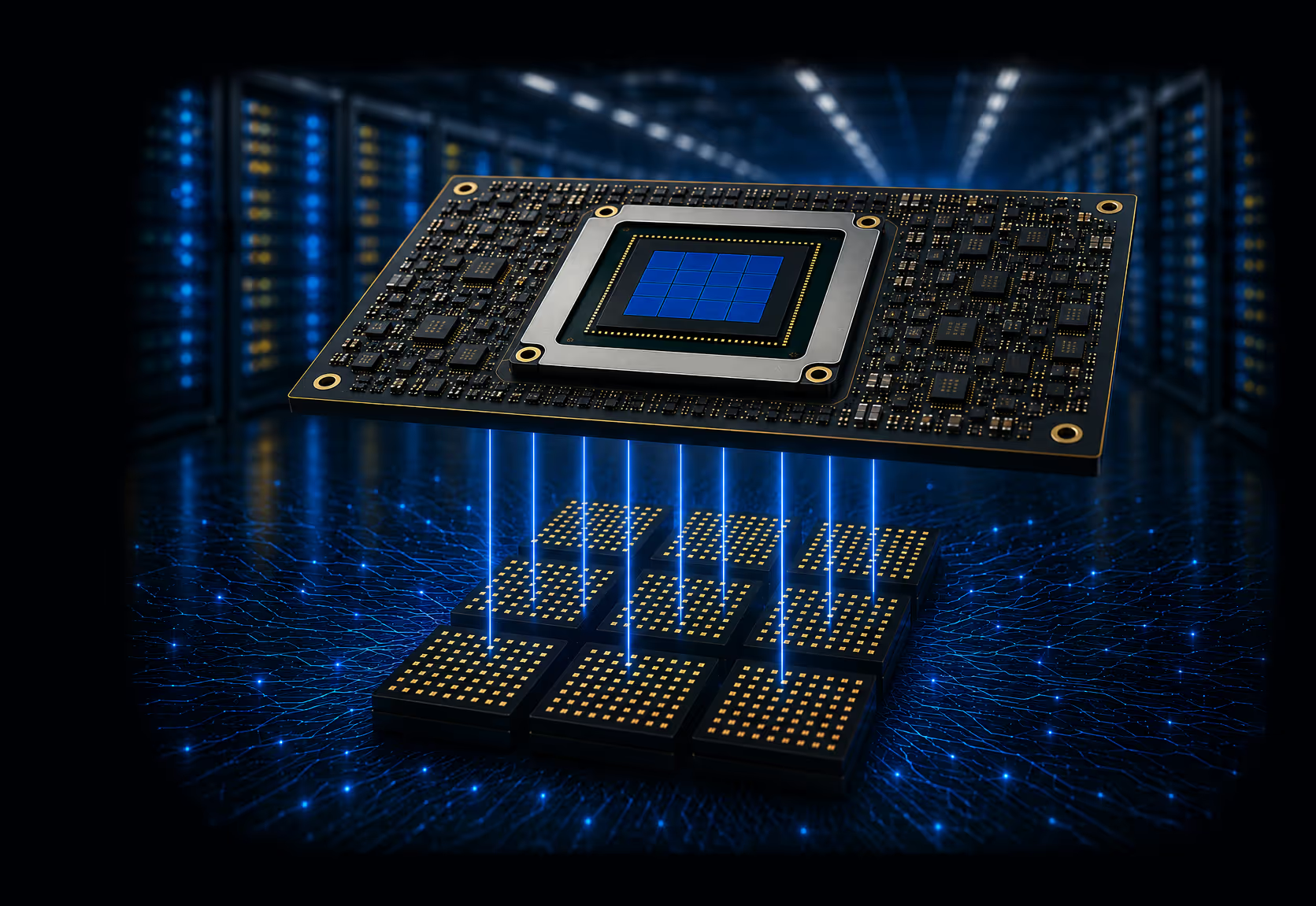
AI acceleration, hyperscale computing, and advanced data center architectures demand unprecedented power density, efficiency, and thermal performance. As workloads scale and processors draw thousands of amps at low voltages, power delivery has become a primary system-level constraint.
Lotus Microsystems addresses this challenge with a new class of vertical power delivery solutions, purpose-built for high-current computing platforms. Our fully integrated Power System-in-Package (PSiP) solutions enable power to be delivered closer to the load, minimizing losses, reducing board complexity, and unlocking higher compute density.
At the core of this approach is the vStrata™ Power Series, an ultra-slim, fully integrated high-current power platform designed for the most demanding data center and AI applications.
The vStrata™ Power Series combines advanced power conversion and 3D packaging with Lotus Power Interposer® (PIT) technology and LTG™ thermal guide technology to address electrical, thermal, and mechanical challenges within a unified architecture for next-generation AI infrastructure.
Lotus Microsystems addresses electrical, thermal, and mechanical constraints as a single, interdependent architecture. Using silicon-based substrates with significantly higher thermal conductivity than standard PCB materials, vStrata enables heat to be managed at the point of load – eliminating hotspots and reducing operating temperatures by up to 25°C in optimized configurations.
vStrata is engineered to support the 1,000A+ current demands of next-generation AI accelerators. By reducing last-inch power losses and thermal bottlenecks simultaneously up to 96% point-of-load efficiency can be achieved. This enables higher compute density per rack and reduces power and cooling overhead, with the potential to unlock up to 30% more sustained GPU throughput by relaxing thermal constraints near the processor.
Lotus Microsystems’ silicon PIT enables an ultra-thin architecture below 1 mm, allowing power to be placed directly beneath the processor. This minimizes electrical distance, improves dynamic performance, and enables stable voltage regulation during fast-changing AI workloads. Overall, vStrata supports load transients exceeding 10 A/ns without the use of external capacitors.
Unlike solutions that require redesigning control ecosystems, vStrata is engineered for integration with established Tier-1 reference designs. The platform is compatible with existing power management controllers, reducing adoption friction while enabling next-generation performance.
Legacy architectures are struggling to support the soaring current loads demanded by modern AI accelerators. The LSC0580 – the first module built on the vStrata platform – bridges this gap. It delivers a low-profile, co-engineered solution that simultaneously resolves electrical, thermal, and mechanical constraints.
Engineering samples of LSC0580 will ship in Q3 2026.
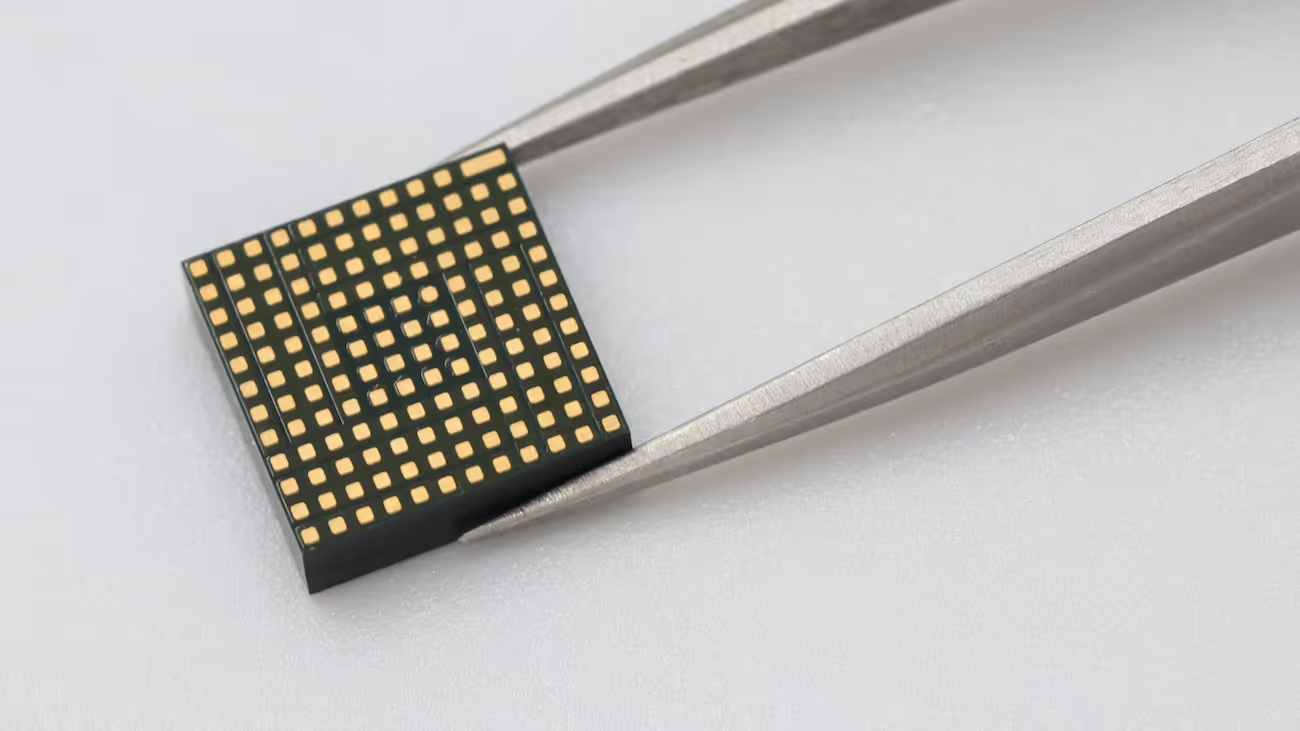
Interested in evaluating next-generation vertical power delivery for xPU and AI infrastructure?
Join the vStrata LSC0580 Early Access Program to gain access to engineering samples, technical updates, and direct collaboration with the Lotus Microsystems engineering team.
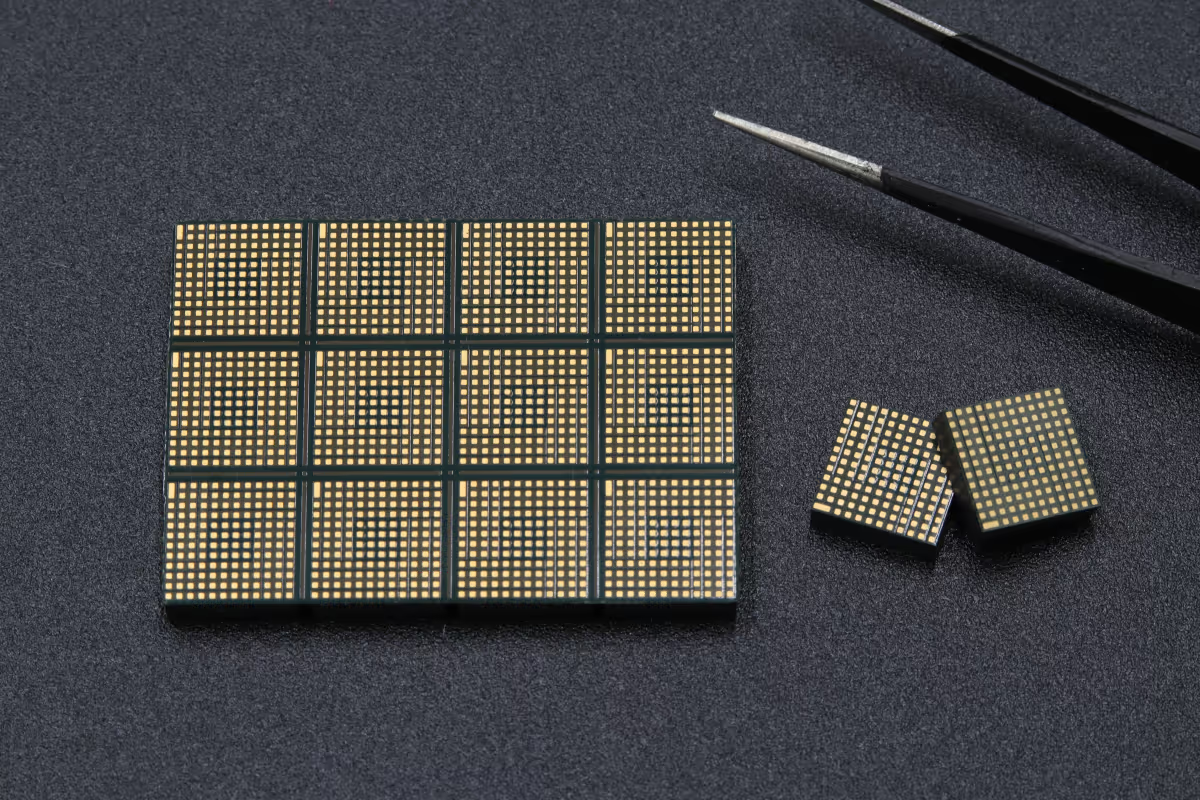
vStrata™ features an innovative hybrid power delivery architecture that seamlessly integrates vertical and lateral approaches.
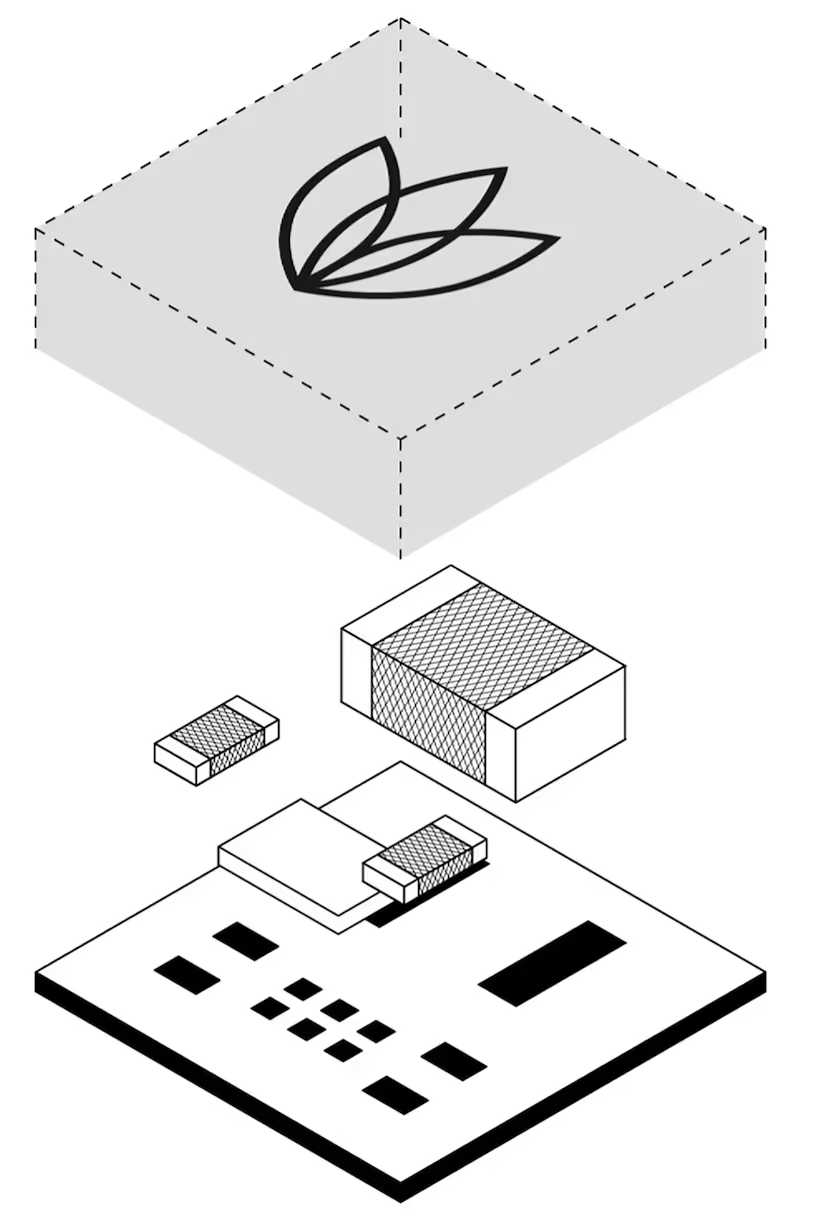
Patented high-current conversion architecture optimized for extreme current density and efficiency. Purpose-built to minimize conduction and switching losses.
Co-designed electrical and thermal interface that enables vertical power delivery while extracting heat effectively from internal module components. Reduces PDN losses, improves thermal performance, and enables higher sustained compute density.
Ultra-thin, vertically integrated 3D packaging that co-optimizes power delivery, thermal management, and system integration. Eliminates the need for external passives, significantly reduces footprint, and enables scalable, high-density AI and HPC platforms.


